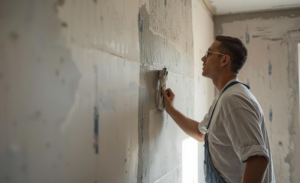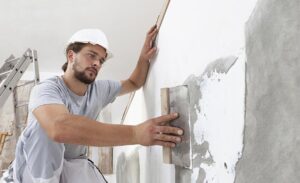
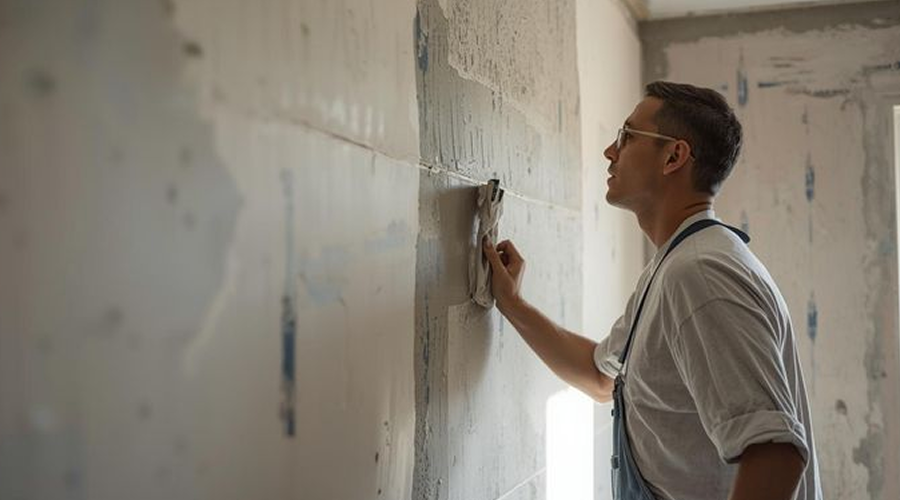
When researching plastering services for your home, you’ll encounter several terms that seem similar but refer to quite different processes. Understanding the distinction between plastering, skimming, and rendering will help you communicate effectively with tradespeople and ensure you get exactly the service you need.
What Is Plastering?
Plastering is the broad term for applying a plaster coating to walls and ceilings, typically in multiple layers. Traditional plastering involves applying a base coat (sometimes called browning or bonding) directly to brick, block, or stone surfaces. This base coat fills irregularities and creates a level surface, usually 10-15mm thick. Once this has dried sufficiently, a finishing coat is applied on top. Full plastering is typically required on bare walls in new builds, extensions, or when you’ve stripped walls back to the brick or block.
The process requires skill to ensure the right thickness is achieved, that the surface is level, and that the plaster is properly keyed to the substrate beneath. Professional plasterers spend years perfecting the technique of applying plaster at the correct consistency, working it to the right thickness, and achieving a smooth finish before it sets.
What Is Skimming?
Skimming, also called skim coating, is the process of applying a thin finishing layer of plaster—typically just 2-3mm thick—over existing plaster or plasterboard. This is the most common plastering service in domestic properties. If your walls are already plastered but have become damaged, marked, or uneven over time, or if you’ve had new plasterboard installed, skimming creates a fresh, smooth surface ready for painting or wallpapering.
Skimming is also used after you’ve removed wallpaper to create a perfect finish, or when you want to refresh tired-looking walls. The thin application means it dries relatively quickly—usually within a few days depending on conditions—and creates a flawless surface. Many homeowners are surprised by the dramatic improvement skimming makes to a room, transforming dated or damaged walls into pristine surfaces.
What Is Rendering?
Rendering refers to applying a cement or lime-based coating to exterior walls. Unlike plastering, which is for internal walls, rendering protects external brickwork from weather while improving the building’s appearance. Traditional renders are usually sand and cement mixes, while modern options include acrylic and silicone-based renders.
K Rend is a popular modern rendering system that combines insulation with a coloured, textured finish that doesn’t require painting. It’s applied in layers to create a weather-resistant barrier that also improves your home’s thermal efficiency. Rendering serves both practical and aesthetic purposes—protecting your property from moisture penetration while giving it a fresh, uniform appearance.
How to Know What You Need
The service you require depends on your project. New builds and extensions typically need full plastering. Renovation projects often need skimming existing walls. External walls need rendering. If you’re unsure, describe what you’re trying to achieve rather than requesting a specific service—for example, “we’ve removed wallpaper and the walls are uneven” or “we’re building an extension and need the new walls finished.”
A professional plasterer will assess your situation during a site visit and recommend the most appropriate solution. They’ll consider factors like the current wall condition, what you’re trying to achieve, your budget, and the timeframe available. Understanding these basic terms helps ensure clear communication and realistic expectations for your project.
Choosing the Right Professional
Whether you need plastering, skimming, or rendering, choosing an experienced professional makes all the difference. Look for plasterers with strong reviews highlighting quality workmanship, clear communication, and tidy habits. Don’t simply choose based on price—plastering is a skilled trade where experience and attention to detail directly impact the quality of your finished walls.